
What Is Progressive Overload? The Essential Principle for Building Strength and Muscle
How to Apply the Most Important Training Concept You're Probably Not Using Correctly

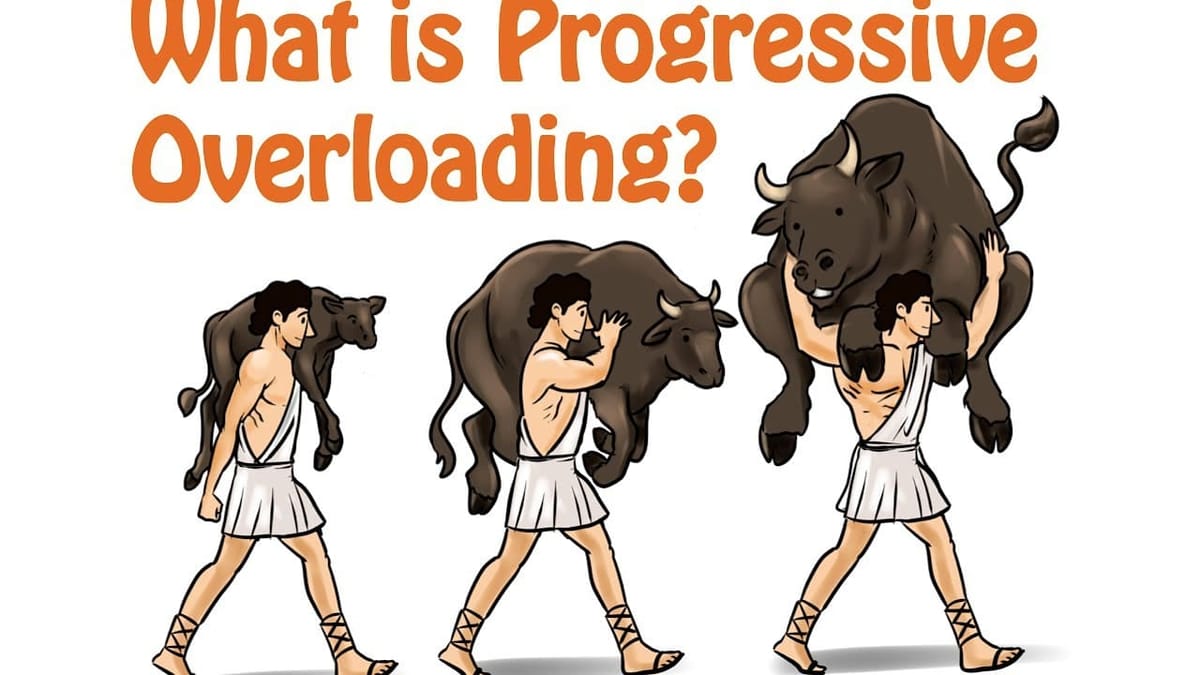
If you've been lifting the same weights for the same number of reps week after week, wondering why you're not getting stronger or building muscle, you're not alone. The missing piece isn't more supplements, fancier exercises, or a complete program overhaul—it's understanding and applying progressive overload, the single most important principle in strength training.
Progressive overload is the gradual increase of stress placed on your body during exercise. It's the reason why your first week of training leaves you sore but the same workout three months later feels easy. Your body adapts remarkably well to physical demands, and without progressively challenging it, those adaptations—muscle growth, strength gains, improved endurance—simply stop happening.
In this guide, you'll learn exactly what progressive overload is, why it's non-negotiable for results, the five main methods to apply it effectively, and how to implement it strategically so you're always progressing without burning out or getting injured.
Understanding Progressive Overload: The Science of Adaptation
Your body operates on a simple principle: it adapts to the demands you place on it. When you lift weights, run, or perform any challenging physical activity, you create microscopic damage to muscle fibers and stress your cardiovascular and nervous systems. Your body interprets this as a threat and responds by building itself back stronger, more resilient, and better prepared for that stress next time.
This is called the General Adaptation Syndrome, and it's the foundation of all athletic training. But here's the crucial part: once your body has adapted to a specific level of stress, that same stimulus no longer triggers further adaptation. The workout that built muscle and strength in week one becomes a maintenance workout by week six if nothing changes.
Progressive overload is the systematic strategy of gradually increasing that stress over time—ensuring your body always has a reason to continue adapting. Research consistently shows that progressive overload is essential for continued gains in muscle mass, strength, power, and endurance. Without it, you reach a plateau, and your progress stalls indefinitely.
The key word here is "gradual". Progressive overload isn't about maxing out every session or adding weight recklessly. It's about strategic, sustainable increases that challenge your body just enough to force adaptation while allowing adequate recovery.
The Five Main Methods of Progressive Overload
Contrary to popular belief, adding more weight to the bar isn't the only way to progressively overload your muscles. In fact, relying solely on weight increases is one of the fastest routes to injury or burnout. Here are five evidence-based methods you can use:
1. Increase Weight (Load)
This is the most obvious form of progressive overload: lifting heavier weights over time. If you squatted 135 pounds for 3 sets of 8 reps last week, you might aim for 140 pounds this week.
How to apply it:
- Increase weight in small increments (2.5-5 pounds for upper body, 5-10 pounds for lower body)
- Only add weight once you can complete all prescribed sets and reps with good form
- For beginners, weight increases can happen weekly; for advanced lifters, monthly or even quarterly
Best for: Compound movements like squats, deadlifts, bench press, and overhead press where small weight jumps are feasible.
2. Increase Volume (Sets or Reps)
Volume refers to the total amount of work performed—typically calculated as sets × reps × weight. Increasing volume means doing more total repetitions or adding additional sets.
How to apply it:
- Add 1-2 reps per set until you reach the top of your rep range, then increase weight and drop back to the lower rep range
- Example: Progress from 3×8 to 3×10, then increase weight and return to 3×8
- Add an extra set to your exercises (going from 3 sets to 4)
Best for: Building muscle mass (hypertrophy) and muscular endurance. Research shows volume is one of the strongest predictors of muscle growth.
3. Increase Frequency
Frequency means how often you train a specific muscle group or movement pattern per week. Increasing frequency provides more opportunities for practice and adaptation.
How to apply it:
- Progress from training a muscle group once per week to twice per week
- Split your weekly volume across more sessions (instead of 12 sets of chest on Monday, do 6 sets Monday and 6 sets Thursday)
- Add an additional training day to your weekly schedule
Best for: Breaking through plateaus, improving skill in complex movements, and increasing total weekly volume without overly fatiguing sessions.
4. Increase Intensity (Tempo, Density, and Proximity to Failure)
Intensity can be manipulated in several ways beyond just adding weight:
Tempo manipulation: Slowing down the eccentric (lowering) phase or adding pauses increases time under tension.
- Example: Take 4 seconds to lower each squat instead of 2 seconds
Density: Performing the same work in less time by reducing rest periods.
- Example: Rest 90 seconds between sets instead of 2 minutes
Proximity to failure: Training closer to muscular failure (the point where you can't complete another rep with good form).
- Example: Leaving 1 rep in reserve instead of 3
How to apply it:
- Experiment with 3-5 second eccentric tempos on key lifts
- Gradually reduce rest periods by 15-30 seconds over several weeks
- Track your RIR (reps in reserve) and occasionally push closer to failure
Best for: Advanced trainees who have maximized basic progression methods, adding variety to stimulate new adaptations.
5. Increase Complexity or Range of Motion
As you become more skilled, you can progress exercises by increasing their difficulty or range of motion.
How to apply it:
- Progress from box squats to full squats to pause squats
- Move from push-ups on knees to regular push-ups to decline push-ups
- Increase range of motion by using deficit exercises (standing on plates for deficit deadlifts)
- Progress from bilateral to unilateral movements (goblet squats to Bulgarian split squats)
Best for: Improving movement quality, addressing weaknesses, and continuing progress when weight increases become impractical.
How to Implement Progressive Overload: A Practical Framework
Knowing the methods is one thing; applying them systematically is what separates those who make consistent progress from those who spin their wheels. Here's a practical framework:
Start with a Baseline
Before you can progress, you need to know where you're starting. For each major exercise in your program:
- Record the weight, sets, reps, and how challenging it felt
- Note your form quality and any limitations
- Track at least one week of training to establish your baseline
Choose Your Primary Progression Method
For each 4-6 week training block, select one primary method of progression:
For beginners (0-6 months training):
- Primary: Increase weight
- Secondary: Increase reps within a range (e.g., 8-12 reps)
For intermediate trainees (6 months - 2 years):
- Primary: Increase volume and weight using double progression (add reps, then weight)
- Secondary: Occasionally manipulate frequency or intensity
For advanced trainees (2+ years):
- Cycle through different methods in training blocks
- Use periodization strategies that vary intensity, volume, and frequency
Apply the 2-for-2 Rule for Weight Increases
A simple, effective guideline: if you can perform 2 or more additional reps beyond your target in the last set for two consecutive workouts, increase the weight by 2.5-5%.
Example: Your target is 3 sets of 10 reps. If you hit 10, 10, and 12 reps in workout 1, then 10, 11, and 12 in workout 2, you're ready to add weight.
Plan Deload Weeks
You can't progressively overload indefinitely. Fatigue accumulates, and eventually, you need a recovery week. Every 4-6 weeks, program a deload where you:
- Reduce volume by 40-50% (fewer sets)
- Reduce intensity by 10-20% (lighter weights)
- Maintain frequency (still train the same number of days)
This allows your body to fully recover and supercompensate, often returning stronger than before.
Track Everything
Progressive overload requires data. You need to know what you did last time to know what to do next time.
Minimum tracking:
- Exercise name
- Weight used
- Sets and reps completed
- How difficult it felt (RPE or RIR)
Optional but helpful:
- Video of key lifts to monitor form
- Sleep quality and stress levels
- Bodyweight and body composition
- How you felt during the workout
Common Progressive Overload Mistakes (And How to Avoid Them)
Mistake #1: Progressing Too Quickly
The most common error is adding weight or volume too aggressively. This leads to form breakdown, increased injury risk, and unsustainable fatigue accumulation.
Solution: Use the smallest weight increments available (consider buying 1.25-pound plates). Add one variable at a time. If you increased weight, don't also reduce rest periods in the same week.
Mistake #2: Progressing Every Single Workout
You don't need to progress in every single session. Some workouts are maintenance, some are progression, and some are recovery.
Solution: Aim to progress your major lifts every 1-3 weeks. It's normal to repeat the same weight for 2-3 sessions before advancing, especially as you become more trained.
Mistake #3: Ignoring Recovery Variables
Progressive overload happens during recovery, not during training. If you're not sleeping well, managing stress, or eating adequately, you're undermining your ability to adapt.
Solution: Treat sleep, nutrition, and stress management as seriously as your training. If recovery is compromised, consider maintaining your current training load rather than pushing for progression.
Mistake #4: Using Only One Progression Method
Relying exclusively on adding weight leads to plateaus and increases injury risk when weight increases become too challenging.
Solution: Rotate through different progression methods. When weight progression stalls, try adding reps or sets, improving tempo, or increasing training frequency.
Mistake #5: Not Adjusting for Individual Exercises
Not all exercises can be progressed the same way. You can add weight to barbell squats much faster than to lateral raises.
Solution: Use weight progression for big compound lifts, rep/set progression for isolation exercises, and technique progression for complex movements like Olympic lifts.
How to Know If Your Progressive Overload Strategy Is Working
Successful progressive overload should produce measurable results. Here's what to look for:
Short-term indicators (2-4 weeks):
- Weights that felt heavy now feel manageable
- You're completing more reps with the same weight
- Form improves and movements feel more coordinated
- You recover faster between sets and sessions
Medium-term indicators (4-12 weeks):
- Consistent increases in weight, reps, or sets in your training log
- Visible changes in muscle definition or size
- Improved performance in daily activities
- Better body composition (more muscle, less fat)
Long-term indicators (3-6 months):
- Significant strength gains (e.g., adding 50-100 pounds to major lifts)
- Noticeable muscle growth
- Achievement of specific performance goals
- Improved confidence and body image
If you're not seeing these markers, revisit your progression strategy, recovery protocols, and nutrition plan.
Applying Progressive Overload Across Your Fitness Journey
Of course, tracking all these variables—weight, sets, reps, rest periods, RPE, and recovery factors—while designing an intelligent progression strategy can be complex to manage manually. This is where AI-powered platforms like BurnOn become invaluable, automatically adjusting your training plan based on your performance data, recovery metrics, sleep quality, and stress levels to ensure you're applying progressive overload optimally without the guesswork or risk of pushing too hard too fast.
Key Takeaways: Mastering Progressive Overload
Progressive overload isn't a single technique—it's a comprehensive approach to training that ensures continuous adaptation and improvement. Here's what you need to remember:
• Progressive overload is non-negotiable for results: Without gradually increasing training stress, your body has no reason to continue adapting, and progress stops.
• You have five main tools: Increase weight, volume (sets/reps), frequency, intensity (tempo, rest periods, proximity to failure), or exercise complexity—use them strategically.
• Progress gradually and systematically: Small, consistent increases over time produce far better results than aggressive jumps that lead to injury or burnout.
• Track your training data religiously: You can't manage what you don't measure—keep a detailed log of exercises, weights, sets, reps, and how each workout felt.
• Balance progression with recovery: Deload weeks, adequate sleep, nutrition, and stress management are essential components of a successful progressive overload strategy.
• Adjust your approach as you advance: Beginners can progress frequently with simple methods; advanced trainees need more sophisticated strategies and longer timeframes between adaptations.
Progressive overload is the difference between spinning your wheels and making consistent, measurable progress toward your strength and physique goals. Master this principle, apply it intelligently, and you'll never wonder why you're not seeing results again.